
Como integrar vendas, PCP e logística para eliminar atrasos e conflitos na indústria?
A integração entre vendas, PCP e logística é viabilizada pelo S&OP (Sales & Operations Planning), um processo estruturado que cria um plano único alinhando demanda comercial, capacidade produtiva e distribuição. Indústrias que implementam S&OP maduro reduzem estoques em até 14%, melhoram a acurácia de previsão em 15-20% e eliminam os conflitos internos que geram atrasos e multas contratuais. A NEO Digital Industries já conduziu essa transformação em mais de 150 plantas industriais com sua abordagem de Planejamento Integrado (S&OP).

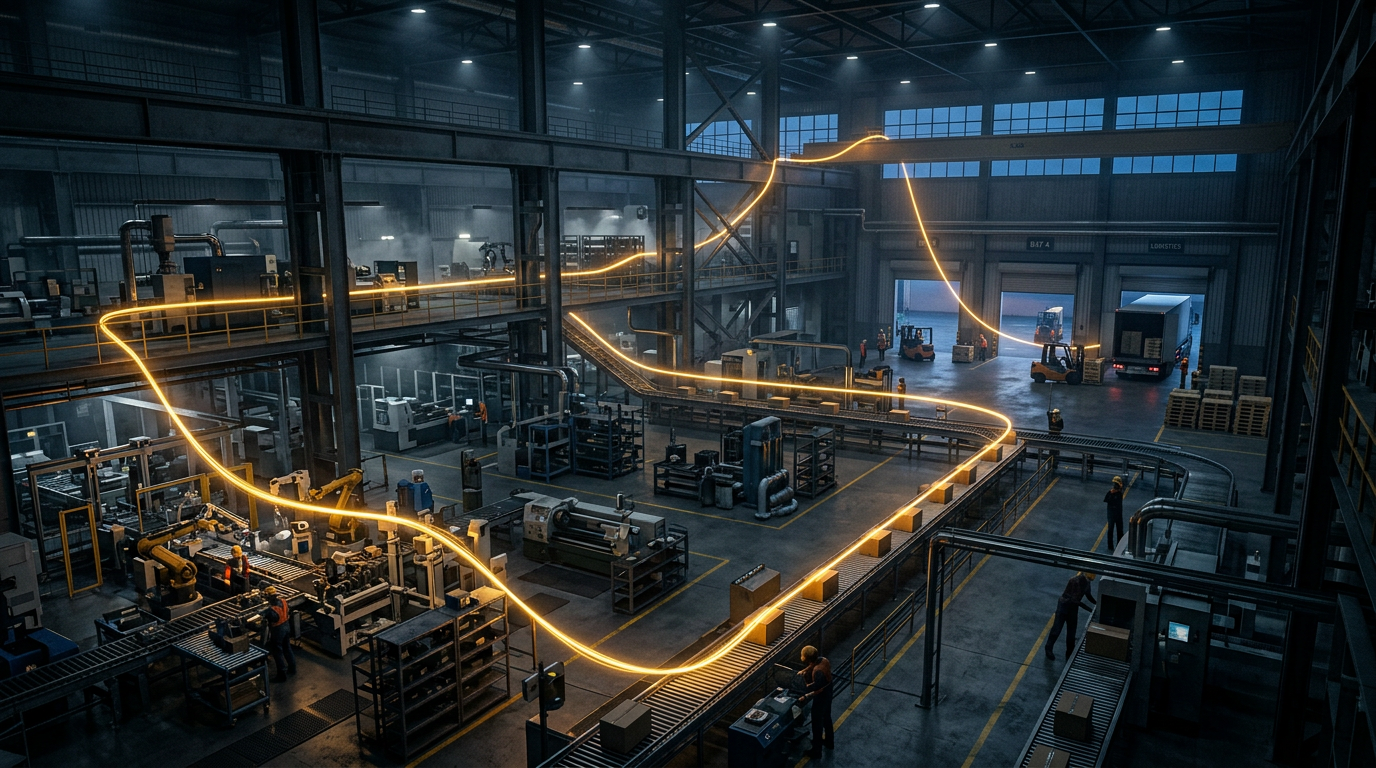
Como integrar vendas, PCP e logística para eliminar atrasos e conflitos na indústria?
O comercial promete um prazo. O PCP tenta encaixar a ordem no sequenciamento. A logística corre para entregar. Esse ciclo se repete diariamente em indústrias que ainda tratam cada área como uma ilha — e o resultado é previsível: atrasos que viram multas, estoques que sobram ou faltam, conflitos internos que travam decisões e clientes frustrados com prazos descumpridos.
Não se trata de um problema novo, mas a pressão para resolvê-lo nunca foi tão intensa. Segundo pesquisa da McKinsey com líderes globais de supply chain, 93% dos executivos planejam aumentar a flexibilidade, agilidade e resiliência de suas cadeias de suprimento. E os dados mais recentes da mesma consultoria mostram que 9 em cada 10 empresas ainda enfrentaram disrupções na cadeia em 2024. A diferença entre as que absorvem o impacto e as que sofrem está, em grande parte, na maturidade do seu processo de planejamento integrado.
Neste artigo, exploramos como o S&OP transforma áreas desconectadas em uma operação sincronizada, quais são os custos reais de não integrar, e como a NEO Digital Industries aplica essa metodologia com tecnologia e consultoria mão-na-massa.
O que é S&OP e por que ele é a chave para integrar vendas, produção e logística?
O S&OP (Sales & Operations Planning) é um processo tático e colaborativo que alinha previsão de demanda, planejamento de produção, gestão de estoques e distribuição logística em um único plano consensual, revisado em ciclos mensais e aprovado pela liderança executiva. Diferente de reuniões informais entre departamentos, o S&OP segue uma estrutura disciplinada com etapas claras e responsabilidades definidas.
Na prática, o S&OP funciona como o sistema nervoso central da operação industrial. Ele conecta o que o comercial está vendendo (ou pretende vender), o que o PCP consegue programar com os recursos disponíveis e o que a logística precisa distribuir dentro dos prazos acordados. Quando essas três pontas operam com a mesma base de dados e as mesmas premissas, a empresa deixa de reagir a crises e passa a antecipar cenários.
O conceito foi formalizado nos anos 1980 por Richard Ling, da consultoria Oliver Wight, e desde então evoluiu para incluir integração financeira, análise de cenários e, mais recentemente, inteligência artificial aplicada à previsão de demanda. Hoje, o mercado global de soluções de S&OP está avaliado em mais de USD 5,4 bilhões (2023), com crescimento projetado acima de 10% ao ano até 2031, segundo a Verified Market Research — um sinal claro de que a indústria reconhece a necessidade de superar o planejamento fragmentado.
O S&OP moderno vai além do balanceamento entre oferta e demanda. Ele se desdobra em cinco etapas estruturadas: coleta de dados, planejamento de demanda, planejamento de suprimentos, pré-reunião de alinhamento e reunião executiva de decisão. Cada etapa envolve áreas diferentes da empresa e gera insumos para a seguinte, criando um ciclo contínuo de refinamento.
Quais são os custos reais de não integrar vendas, PCP e logística?
Os custos de operar com áreas desconectadas vão muito além de atrasos pontuais: eles corroem margem, deterioram a experiência do cliente e criam um ambiente interno de conflitos crônicos que drenam energia gerencial. Empresas com alinhamento deficiente entre áreas perdem, em média, 10 a 15% da sua receita potencial por ineficiências de processo e oportunidades desperdiçadas, segundo pesquisa da Gartner (2024).
Atrasos que se transformam em multas e perda de clientes
Quando o comercial fecha um pedido com prazo agressivo sem consultar a capacidade real do PCP, cria-se um efeito cascata. O PCP precisa reorganizar o sequenciamento (frequentemente prejudicando outros pedidos), a compra de materiais entra em regime de urgência com sobrepreço, e a logística recebe um plano inviável que resulta em entregas parciais ou atrasadas.
Em setores como automotivo e bens de consumo, atrasos recorrentes levam não apenas a multas contratuais, mas à perda de posições em programações de fornecimento — um dano que pode levar meses para recuperar. Pesquisa da Forrester (2024) aponta que 68% dos compradores B2B abandonam processos de compra quando recebem mensagens ou promessas contraditórias ao longo da jornada.
Estoques desbalanceados: capital parado ou ruptura
Sem visibilidade compartilhada entre demanda comercial e planejamento de produção, a fábrica opera com dois riscos simultâneos: excesso de estoque em itens de baixo giro (capital parado, risco de obsolescência) e ruptura de estoque em itens de alta demanda (vendas perdidas, clientes insatisfeitos). Segundo o IBF (Institute of Business Forecasting), empresas que implementam S&OP maduro reduzem estoques entre 9% e 14% sem comprometer o nível de serviço.
Conflitos internos que drenam produtividade
Quando cada área opera com premissas diferentes, o conflito é estrutural, não pessoal. O comercial é cobrado por volume, o PCP por aderência ao plano, a logística por custo de frete. Sem um processo que alinhe esses objetivos em um plano único, as reuniões se transformam em disputas por prioridade, e as decisões são tomadas por quem fala mais alto — não por quem tem o melhor dado.
Como o S&OP conecta vendas, PCP e logística na prática?
O S&OP cria integração real ao estabelecer um ciclo mensal estruturado onde cada área contribui com suas informações e restrições, e todas convergem para um único plano operacional aprovado pela liderança. Não se trata de mais uma reunião — é um processo com etapas, entregáveis e governança claros.
Etapa 1 — Planejamento de demanda
O ciclo começa com a área comercial traduzindo sua carteira de pedidos, pipeline de oportunidades e campanhas planejadas em uma previsão de demanda por família de produto. Essa previsão combina dados históricos de vendas, inteligência de mercado e inputs qualitativos dos vendedores. Empresas com processos maduros de S&OP alcançam acurácia de previsão superior a 80%, segundo dados do setor — e aquelas que aplicam IA e machine learning à previsão relatam ganhos adicionais de 30-40% na acurácia em relação a processos manuais (Abacum, 2024).
Etapa 2 — Planejamento de suprimentos e capacidade
Com a demanda consolidada, o PCP avalia se a capacidade produtiva, a disponibilidade de matéria-prima e os recursos humanos suportam o plano. Aqui entram as ferramentas de APS (Advanced Planning and Scheduling), que permitem simular cenários de produção com capacidade finita. O mercado de APS já movimenta mais de USD 1,4 bilhão globalmente e cresce acima de 10% ao ano, impulsionado pela Indústria 4.0. Dados do setor indicam que dois terços das empresas já estão avançando na implementação de sistemas APS como componente central da digitalização do supply chain (McKinsey Global Supply Chain Leader Survey, 2024).
Etapa 3 — Pré-reunião e alinhamento de gaps
As equipes de planejamento comparam oferta e demanda, identificam gaps, conflitos e restrições, e preparam cenários com trade-offs claros para a liderança. É nesta etapa que a logística entra com visibilidade de capacidade de armazenagem, janelas de entrega e restrições de transporte.
Etapa 4 — Reunião executiva e plano aprovado
A liderança avalia os cenários, toma decisões sobre trade-offs (ex: investir em hora extra vs. adiar pedidos, priorizar margem vs. volume) e aprova um plano único. A partir dali, comercial, PCP e logística operam com o mesmo plano e as mesmas premissas — não com planilhas e achismos isolados.
O papel da tecnologia como base integradora
Quando ERP, APS e sistemas de gestão de transporte (TMS) estão integrados e alimentam o processo de S&OP com dados em tempo real, o ciclo de decisão que antes levava semanas pode ser executado de forma muito mais ágil. A Oracle destaca que as empresas modernas já não precisam se limitar ao ciclo mensal tradicional — com ferramentas de análise avançada, é possível reagir a mudanças com latência muito menor.
A NEO Digital Industries viabiliza essa integração combinando o Siemens Opcenter APS para sequenciamento de produção com capacidade finita, o nPlan para planejamento colaborativo, e consultoria especializada em processos de S&OP. O resultado é uma operação onde o plano comercial se traduz em ordens de produção realistas e entregas executáveis.
Quando a indústria deve investir em S&OP e planejamento integrado?
A decisão de implementar S&OP é mais urgente quando a empresa apresenta sintomas crônicos de desalinhamento operacional: alta taxa de reprogramação de produção, conflitos frequentes entre áreas, nível de serviço abaixo da meta e estoques desbalanceados. Quanto maior a complexidade do mix de produtos e a variabilidade da demanda, maior o retorno do investimento.
Alguns sinais claros de que é hora de estruturar o S&OP:
- O prazo prometido pelo comercial raramente é cumprido — e ninguém sabe se o problema é de capacidade, material ou logística
- As reuniões entre áreas são recorrentes, mas não geram plano de ação — apenas debates sobre quem errou
- A fábrica vive reprogramando a produção por mudanças de prioridade vindas do comercial sem visibilidade de impacto
- Os estoques crescem, mas as rupturas não diminuem — sinal de que se produz o mix errado, não o volume errado
- A logística opera em regime de urgência permanente, com fretes expressos que corroem a margem
Pesquisa do IBF (Institute of Business Forecasting) revela que empresas que atingem maturidade intermediária em S&OP podem esperar, em média, 2,4% de melhoria no resultado operacional (1,8% em savings e 0,6% em receita incremental), com breakeven do projeto em aproximadamente 15 meses. Empresas com S&OP altamente maduro reportam reduções de até 20% nos custos de manutenção de estoque e 10% de melhoria nos tempos de atendimento de pedidos, segundo a Gartner.
Qual a diferença entre S&OP e S&OE — e por que os dois importam?
O S&OP atua no horizonte tático, tipicamente de 3 a 24 meses, definindo volumes, capacidades e prioridades no nível de família de produto. Já o S&OE (Sales & Operations Execution) gerencia a execução no curto prazo — de 0 a 13 semanas — garantindo que os desvios do plano sejam identificados e corrigidos rapidamente.
Na prática, o S&OP define o que a empresa vai produzir e entregar nos próximos meses. O S&OE cuida do como, ajustando semanalmente o plano para absorver variações de demanda, quebras de máquina, atrasos de fornecedores e outras disrupções operacionais.
Empresas que implementam apenas o S&OP sem um processo robusto de S&OE criam bons planos mensais, mas perdem aderência nas primeiras semanas de execução. Segundo a McKinsey Global Supply Chain Leader Survey (2024), as empresas levam, em média, duas semanas para planejar e executar uma resposta a disrupções — muito mais que o ciclo semanal ideal de revisão do S&OE. É por isso que a NEO Digital Industries trabalha os dois processos em conjunto: o S&OP com visão estratégica via nPlan e o controle de execução com Opcenter APS e soluções de MES integradas.
O que o IBP tem a ver com S&OP — e para onde o processo está evoluindo?
O IBP (Integrated Business Planning) é a evolução natural do S&OP, adicionando integração financeira e alinhamento com a estratégia corporativa ao processo de planejamento operacional. Enquanto o S&OP tradicional conecta demanda e suprimentos, o IBP garante que o plano operacional se traduza diretamente em impacto no P&L, balanço e fluxo de caixa.
Na prática, o IBP transforma o S&OP de uma reunião de supply chain em um processo de decisão empresarial onde operações, finanças, comercial e desenvolvimento de produto trabalham com um único conjunto de números e trade-offs claros. Segundo a QAD, o IBP conecta dados de ERP, CRM, PLM, MES e finanças para que a liderança tenha uma visão integrada e confiável de demanda, suprimento, custo e risco.
A tendência para os próximos anos é clara: IA aplicada à previsão de demanda, digital twins para simulação de cenários de produção e logística, e plataformas colaborativas em nuvem que permitem ciclos de planejamento mais curtos e responsivos. O mercado de soluções de S&OP, que já vale mais de USD 5 bilhões, deve praticamente dobrar até 2031, impulsionado por essa convergência tecnológica.
A NEO Digital Industries acompanha essa evolução com o NEO Labs, integrando capacidades de IA e algoritmos proprietários ao planejamento, e posicionando seus clientes para avançar do S&OP tradicional ao IBP com infraestrutura tecnológica adequada.
Como a NEO Digital Industries implementa o planejamento integrado?
A abordagem da NEO Digital Industries ao S&OP combina três pilares: tecnologia de classe mundial, consultoria de processos e acompanhamento de execução. Diferente de fornecedores que entregam apenas software, a NEO atua mão-na-massa no desenho do processo, na parametrização das ferramentas e no acompanhamento dos primeiros ciclos até que a empresa ganhe autonomia.
O stack tecnológico que sustenta o planejamento integrado da NEO inclui:
- Siemens Opcenter APS — para sequenciamento de produção com capacidade finita, tratando restrições de máquinas, materiais, setup e mão de obra simultaneamente
- nPlan — a plataforma de planejamento colaborativo da NEO que conecta demanda, produção e distribuição em uma visão unificada
- Evocon — para monitoramento de OEE em tempo real, alimentando o S&OP com dados reais de eficiência do chão de fábrica
- AX4 — para visibilidade logística e coordenação da cadeia de distribuição
Clientes como Grendene, Whirlpool e Tigre são exemplos de indústrias que confiaram na NEO para sair do modelo "cada área por si" para o planejamento verdadeiramente integrado. Com mais de 150 plantas industriais atendidas, a NEO acumulou experiência prática que permite adaptar o processo de S&OP à realidade de cada operação — desde indústrias com produção sob encomenda até fabricantes de bens de consumo com alta variabilidade de demanda.
Como reforça a filosofia "Ciborgues da Indústria" da NEO: a transformação digital na manufatura não é sobre substituir pessoas por máquinas, mas sobre equipar os profissionais de planejamento com as ferramentas certas para tomar decisões melhores e mais rápidas.
Perguntas frequentes sobre integração de vendas, PCP e logística
O que é S&OP (Sales & Operations Planning)?
S&OP é um processo de gestão que alinha demanda comercial, planejamento de produção, gestão de estoques e logística de distribuição em um único plano consensual. Ele é revisado mensalmente com participação de todas as áreas funcionais e aprovação da liderança executiva. O objetivo é garantir que a empresa opere com um plano único e viável, eliminando conflitos entre departamentos.
Qual a diferença entre S&OP e PPCP?
O PPCP (Planejamento, Programação e Controle da Produção) é uma função específica que cuida da programação detalhada da produção no chão de fábrica. O S&OP é um processo mais amplo que inclui o PPCP como uma de suas etapas, mas também incorpora demanda comercial, planejamento financeiro e logística de distribuição. O S&OP define o quê e quanto produzir; o PPCP define como e quando cada ordem será executada.
É possível fazer S&OP sem software especializado?
Sim, é possível iniciar o S&OP com planilhas e reuniões estruturadas. Porém, empresas que operam com alta complexidade de mix e volume atingem rapidamente os limites das planilhas: erros de consolidação, falta de simulação de cenários e ciclos de planejamento excessivamente longos. Ferramentas como APS e plataformas de S&OP permitem escalar o processo com acurácia e agilidade significativamente maiores.
Quanto tempo leva para implementar um processo de S&OP?
Um processo básico de S&OP pode ser estruturado em 3 a 4 meses, incluindo desenho do processo, definição de KPIs e primeiros ciclos piloto. Para atingir maturidade intermediária com resultados consistentes, o prazo típico é de 12 a 18 meses. Segundo o IBF, o breakeven do investimento em S&OP ocorre em aproximadamente 15 meses após o início do projeto, com benefícios crescentes à medida que o processo amadurece.
A NEO Digital Industries ajuda empresas a implementar S&OP?
Sim. A NEO Digital Industries oferece consultoria completa de Planejamento Integrado (S&OP), desde o diagnóstico da maturidade atual até a implementação de tecnologias como Siemens Opcenter APS e nPlan, passando pelo desenho de processos e capacitação de equipes. Com experiência em mais de 150 plantas industriais e clientes como Grendene, Whirlpool e Tigre, a NEO combina metodologia comprovada com tecnologia de ponta para transformar o planejamento da sua operação.
Conclusão
A integração entre vendas, PCP e logística não é um sonho — é uma necessidade operacional que separa indústrias competitivas de indústrias que apagam incêndios todos os dias. O S&OP é a metodologia comprovada que transforma departamentos desconectados em uma operação sincronizada, com impacto direto em redução de estoques, melhoria de nível de serviço e eliminação de conflitos internos.
Em um cenário onde 93% dos líderes de supply chain reconhecem a necessidade de mais flexibilidade e agilidade, e onde o mercado de soluções de planejamento avançado cresce acima de 10% ao ano, postergar a estruturação do S&OP não é prudência — é risco.
A NEO Digital Industries está pronta para conduzir essa transformação na sua operação. Com mais de 150 plantas industriais atendidas, tecnologia Siemens Opcenter APS, a plataforma nPlan e uma equipe de consultores que conhece o chão de fábrica de verdade, a NEO combina o melhor da metodologia S&OP com as ferramentas certas para a sua realidade.
→ Descubra como funciona o Planejamento Integrado (S&OP) da NEO
Fontes e referências
- McKinsey & Company — "Resetting supply chains for the next normal" (2020): pesquisa com líderes de supply chain onde 93% planejam aumentar resiliência
- McKinsey Global Supply Chain Leader Survey (2024): 9 em 10 empresas enfrentaram disrupções; 2/3 avançando em implementação de APS
- Gartner (2024): empresas com S&OP maduro alcançam até 20% de redução em custos de estoque e 10% de melhoria em atendimento de pedidos
- IBF (Institute of Business Forecasting): S&OP maduro gera 2,4% de melhoria operacional e redução de estoques de 9-14%
- Verified Market Research: mercado de S&OP avaliado em USD 5,45 bilhões (2023), projetado para USD 10,52 bilhões até 2031
- Spherical Insights: mercado de APS projetado para USD 4,23 bilhões até 2035, CAGR de 10,29%
- Forrester (2024): 68% dos compradores B2B abandonam processos com mensagens contraditórias
- Abacum (2024): IA e ML melhoram acurácia de previsão em 30-40% vs. processos manuais
- QAD (2025): IBP como evolução do S&OP integrando operações a resultados financeiros