

APS software cuts scheduling time by more than 80% and broadens strategic responsibilities at Peccin
Discover how Peccin, the Brazilian company that produces candies and chocolates, chose to deploy a solution that would improve production efficiency and ensure outstanding customer service.
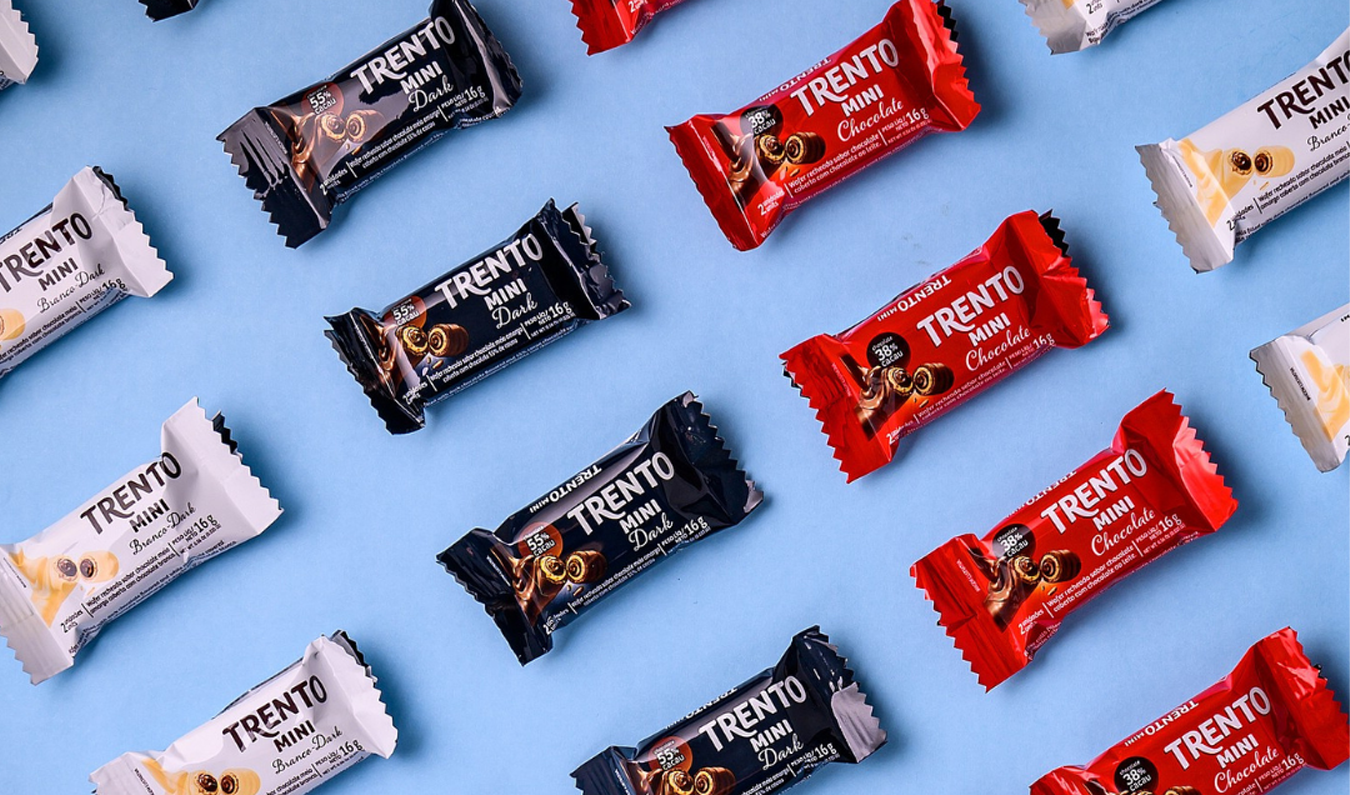

Get to know Peccin, renowned for its innovation in the shapes and flavors of candies and chocolates, and positioned as one of the 6 largest companies in the sector in the country
About us
Renowned for its innovation in the shapes and flavors of candies and chocolates, Peccin, which currently has approximately 1,300 direct employees and more than 200 products, was founded in 1956 by the Pezzin brothers. At the time, it was a modest artisanal production facility, focused on the candy niche. In 1984, the company began the involvement of the second generation in its management, adding chocolate production to its portfolio in 2011.
Recently, it has grown even further, with a 40,000 m² industrial park in Erechim, in Rio Grande do Sul, with two independent plants. Peccin produces 4,000 tons of candies and chocolates monthly, positioning itself as one of the 6 largest companies in the sector in the country.
Peccin produces chewy candies, lollipops, chewing gum, and chocolate wafers, standing out with its brands: Tribala, Blong, and Trento. Major investments, agility in development, and constant research in the pursuit of new products ensure Peccin's success.
Little by little, Peccin gained ground on the national scene, expanding its lines and increasing its coverage in the Brazilian market, with 84% of its products directed to the domestic market with 124 candy SKUs and 56 chocolate SKUs, in addition to exporting to more than 60 countries across the 5 continents, such as the United States, Canada, Arab countries, and all of Latin America.
The challenge
Since 2011, with its entry into the chocolate sector and the considerable increase in its product portfolio, Peccin identified an opportunity to improve its production efficiency and ensure excellent service to its customers, but it was only in 2018 that contact began with the solutions available on the market.
In 2022, Peccin decided to move forward with the implementation of a solution that would improve its production scheduling in order to tackle these challenges, and it chose NEO as its implementation partner on this journey and SIEMENS as the technology provider of the software to be implemented, OPCENTER APS. The decision to choose NEO as a partner was based mainly on the successful cases of OPCENTER APS implementation at other companies in the food sector, reinforcing its closeness to and experience with Peccin's challenge.
Right from the specification schedule, the Peccin and NEO teams began the challenge of implementing OPCENTER APS in both production plants of the park, which had outdated records, a lack of fine production sequencing, and an ERP with partial implementation.
Due to the large number of SKUs and the production sequencing generated manually through Excel, it was necessary to restrict lines and resources to specific product groups, making it difficult to balance the units and meet delivery deadlines. In addition, production orders for the next 2 weeks were generated manually in the Oracle ERP, making the process slow and inefficient.
The low visibility of the scheduling made it difficult to accurately sequence sales orders, which were fitted in between MTS (make-to-stock) production orders, taking into account only the delivery date.
The solution
After analyzing the existing records and information about the specifics of production, the team decided to begin the implementation of OPCENTER APS at the chocolate production plant. Together with the factory employees, all the characteristics and constraints of the resources present in the unit were mapped, and all the missing records were reviewed so that the Peccin team could fill them in quickly.
The integration with the Oracle ERP was easy and fast thanks to Peccin's internal IT team, which had full command of the existing tables and possible extractions; thus, all the transactional information (such as resources, products, bills of materials, etc.) was imported into OPCENTER APS. Along with the data, the production plan for finished products for the next 6 months was imported, enabling the automatic generation of the production orders for the products and their components for this period in OPCENTER APS.
"The implementation of OPCENTER APS at Peccin is a very important milestone for the beginning of the company's digitalization journey."— Bruno Bortolatto, Project Manager at NEO
Based on the generation of orders, a proprietary sequencing rule was developed for chocolates, where the production lines are scheduled prioritizing setup times between flavors, brands, and weights, as well as delivery dates, while respecting labor and tooling constraints. Following the sequencing of the lines as the pacemaker process, the other resources are scheduled respecting the defined order. The new method of generating and sequencing orders made it possible to increase visibility and responsiveness, making it possible to fit in sales orders more quickly and accurately.
Completing the functionalities developed by the NEO team is the export of firm orders grouped into production batches to the Oracle ERP and the generation of reports with raw material requirements for the purchasing department. Thus, after the sequencer's orders are confirmed, a report is generated for export, which integrates the orders generated in OPCENTER APS into the ERP and feeds a Follow-Up report with the materials that will be consumed, allowing the predictability of delays or stock shortages.
After 4 months, the implementation of OPCENTER APS at the chocolate plant was completed and already in use in production, while the NEO team worked together with the Peccin team to expand the solution to the candy unit.
Although the candy solution was more complex, as it involved more resources and constraints, the Peccin team's knowledge of the solution greatly facilitated the implementation process of the second plant, taking only 2 months for the sequencing to begin being used in production.
The initial adaptation was complex, as changes to processes were necessary, but as the tool was validated and put into use, the users' own analyses became more complete and the use of the sequencer became increasingly greater and more accurate.
"The ability to create scenarios, as well as the agility and visibility of production, make decision-making support much more dynamic than before. The PPCP team has certainly become much more analytical than operational with the advancement of the solution; this was only possible thanks to all the dedication and commitment of the PECCIN team."— Bruno Bortolatto, Project Manager at NEO
The results
Following the complete implementation of OPCENTER APS at both of Peccin's production plants, a reduction in scheduling time from 3 days to a 4-hour shift was observed. In other words, a reduction of more than 80% in the time of this process.
During the period dedicated to sequencing, it is also possible to generate different scenarios, allowing the PPCP employees to have a more strategic role, deciding on the best scenario based on reports and indicators. The generation of orders from the production plan made it possible to reschedule the orders over the 6-month period, increasing the factory's responsiveness to different situations.
"NEO's support made the tool work to meet our specific needs, developing rules that make day-to-day operations easier without impacting what was already working. The partnership between NEO and Peccin is very important for sustaining the tool. Today, we have fast and productive responses."— Jades Romano Costa, PPCP Specialist
The reports developed enabled the integration between areas such as PPCP, Production, Purchasing, Sales, and R&D, providing a better response for the sales area and a consequent increase in the service level through full visibility of setup times and delivery dates.
In addition, the reports allow a detailed analysis of resource utilization, stock projection with alerts for delays and shortages, and opportunities to renegotiate purchasing and sales deadlines—aspects of extreme importance for production support areas such as Purchasing and Sales.
SEE MORE RESULTS LIKE THIS AND LEARN HOW TO PROJECT THE ROI FOR A SUPPLY CHAIN PLANNING PROJECT IN YOUR INDUSTRY:
Free Ebook: How to Make Money With a Supply Chain Planning Project
Executive guide featuring data from over 30 documented projects. Discover the three sources of ROI, how to build a solid business case, and a step-by-step payback formula you can apply today.
Talk to one of our APS experts
Get a personalized assessment of your operations from APICS CPIM certified consultants. We will help you identify opportunities for improvement and estimate the return on your project.