

Grupo Lunelli innovates and brings more agility to the PC process
Discover how Grupo Lunelli cut production scheduling time by 40% and achieved significant reductions in inventory and throughput time, while delivering greater visibility and agility to the scheduling process.
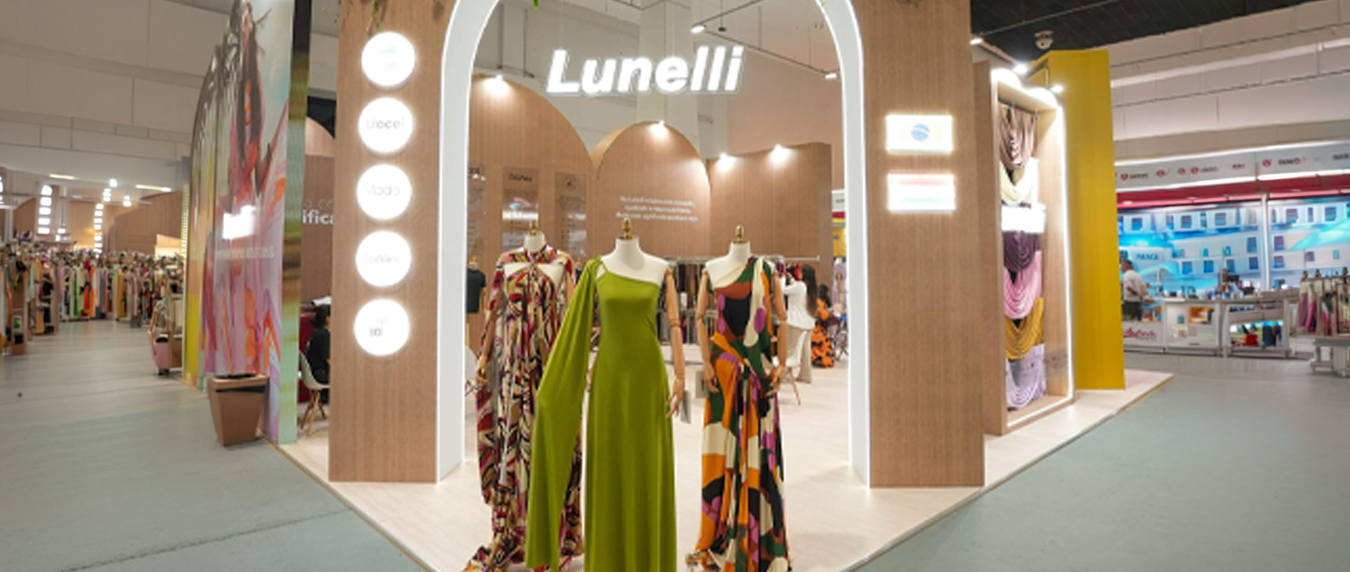

Meet Grupo Lunelli, a national benchmark in the textile market
About us
Grupo Lunelli carried out, in partnership with NEO Engenharia de Produção, the Advanced Production Scheduling project using SIEMENS' OPCENTER PREACTOR APS software. The group began its history in 1981 with the company Lunender, whose main product was diapers; it now has 16 factories, 165,000 m² of built area and more than 4,600 employees. In 2011, Grupo Lunelli was officially created, a group focused on fashion, established as a national benchmark in the textile market and serving around 16,000 customers.
The challenge
Prior to the APS project, Grupo Lunelli scheduled its bottleneck resources manually. An analyst performed this task most of the time, assigning production priorities to orders. Before that, the analyst had to allocate raw materials to check whether all the fabrics would be ready in order to start the production order. This entire process took a great deal of time and left room for human error, not to mention that the analyst always had to aim for a balance between the production resources.
Given the difficulty faced by the PPCP department, Grupo Lunelli sought a partnership with NEO Engenharia de Produção to implement Preactor AS (Advanced Scheduling). The objectives were clear to both partners from the outset: to reduce the PPCP workload; to reduce work-in-process inventory (WIP); and to reduce lead times (Lead Time).
The solution
During the solution specification process, priority was given to implementing Preactor in the group's two largest factories: Finishing and Apparel. Accordingly, for each model the business rules and the parameters required for scheduling were defined together with the Grupo Lunelli team. For the Apparel unit, there was great concern about synchronization between operations, and scheduling also had to take into account a series of factors to ensure on-time delivery to the end customer. The alternative found was scheduling based on parameter weighting, which gives the user great autonomy to generate multiple scenarios.
In addition, due to the high inflow of raw materials, inventory needed to be updated frequently. For this reason, an automatic update version was added that imports this data, schedules the new orders and returns it to the ERP without any human intervention.
In the Finishing unit, the main concern was the dyeing process, which required a great deal of effort and judgment when scheduling. Due to high setups in the event of a machine wash, maintaining a smooth sequence of dyeing colors that respects the gradient increases the factory's productivity.
The dyeing process is by nature carried out in batches, which required the team, together with NEO, to design a rule for generating dyeing orders. This generation rule always aimed to fill the factory's largest machines first, being able to group different SKUs, different orders and still keep items that cannot be dyed in separate batches.
Furthermore, the project was extended to the knitting area. In this part of the solution, a custom rule for allocating rolls of raw knit fabric was developed for Lunelli, aiming to optimize inventory and even considering the location of the fabrics to reduce picking time. After this process, order generation and scheduling of the knitting area were implemented, making it possible to link the dyeing and knitting sectors so that the scheduling of the looms is based on dyeing priorities.
"By simply moving a pointer, we obtain new scheduling quickly and without great effort."— Ricardo Lauri da Silva, PCP Manager, Lunelli Vestuário
The results
The APS implementation has already generated excellent results for the group. The PPCP effort metrics for scheduling were drastically reduced; for example, in the finishing unit it was reduced to 25% of the time previously spent on scheduling and sequencing. In addition, a reduction in lead time was achieved: the average lead time of a production order from PCP through to cutting was 3 days, and today it is approximately between 6 and 12 hours. This agility allows inventory to turn over faster, which lowers the company's operating cost.
Another major gain perceived by the team was the visibility that the tool delivered to both the scheduler and management. Through reports, there is now a view of the factory's current situation, the production history and the forecast for the future. In the past, this information did not exist.
All this visibility and access to information enabled the factory to understand and carry out what was in fact best for the company as a whole, respecting the old maxim "the local optimum may not be the global optimum".
Even with the benefits mentioned, Grupo Lunelli continues to seek new challenges to improve the production management of its factory, counting on NEO's support so that PPCP becomes increasingly digital, agile and efficient.
SEE MORE RESULTS LIKE THIS AND LEARN HOW TO PROJECT THE ROI FOR A SUPPLY CHAIN PLANNING PROJECT IN YOUR INDUSTRY:

Free Ebook: How to Make Money With a Supply Chain Planning Project
Executive guide featuring data from over 30 documented projects. Discover the three sources of ROI, how to build a solid business case, and a step-by-step payback formula you can apply today.

Talk to one of our APS experts
Get a personalized assessment of your operations from APICS CPIM certified consultants. We will help you identify opportunities for improvement and estimate the return on your project.