What changes when demand, inventory policy, supply and capacity finally live in the same environment. The effect on inventory turns, material shortages and the reliability of the master production schedule. Some of these case studies started in scheduling and ended up solving a planning problem.
From the people who run the solution every day.
“Implementing nPlan marked the evolution of Unipac's supply chain. By integrating planning, production and inventory, the solution raised the quality of our decisions and brought speed, confidence and an integrated view.”MARCELO TRINDADESupply Chain Manager, Unipac
“After implementing APS it became much easier to see the line's real capacity, which allowed better management of critical production items and more visibility to negotiate shipping dates with customers.”JOSÉ HENRIQUE TEIXEIRAProduction Planning Analyst, ArcelorMittal Gonvarri
“With Opcenter APS we have a much clearer view of the shop floor. That makes the dates we commit to more accurate and production management far more organised.”GUILHERME LAGEProduction Planning, Cecal
A single rule inflates tied-up capital and still leaves the critical item exposed. These case studies show inventory falling 9% to 50% without losing service, through segmentation by lead time and forecast accuracy. Start by understanding how to calculate inventory coverage.
A monthly MRP run is born late and ignores constraints. When material requirements are recalculated together with production capacity, shortages on the line fall: up to 58% fewer material stockouts in these case studies. Worth reading: what was missing in MRP for APS to emerge.
Infinite capacity is not executable. These case studies started generating the plan with resource constraints in the model and gained service level along the way. If the two layers still blur together, see the difference between planning and scheduling.
Planning solves the mid term. What executes the plan day to day is scheduling and the shop floor.
A 30-minute conversation about demand, inventory policy and capacity with a team that has been doing this for over ten years.
Book a conversation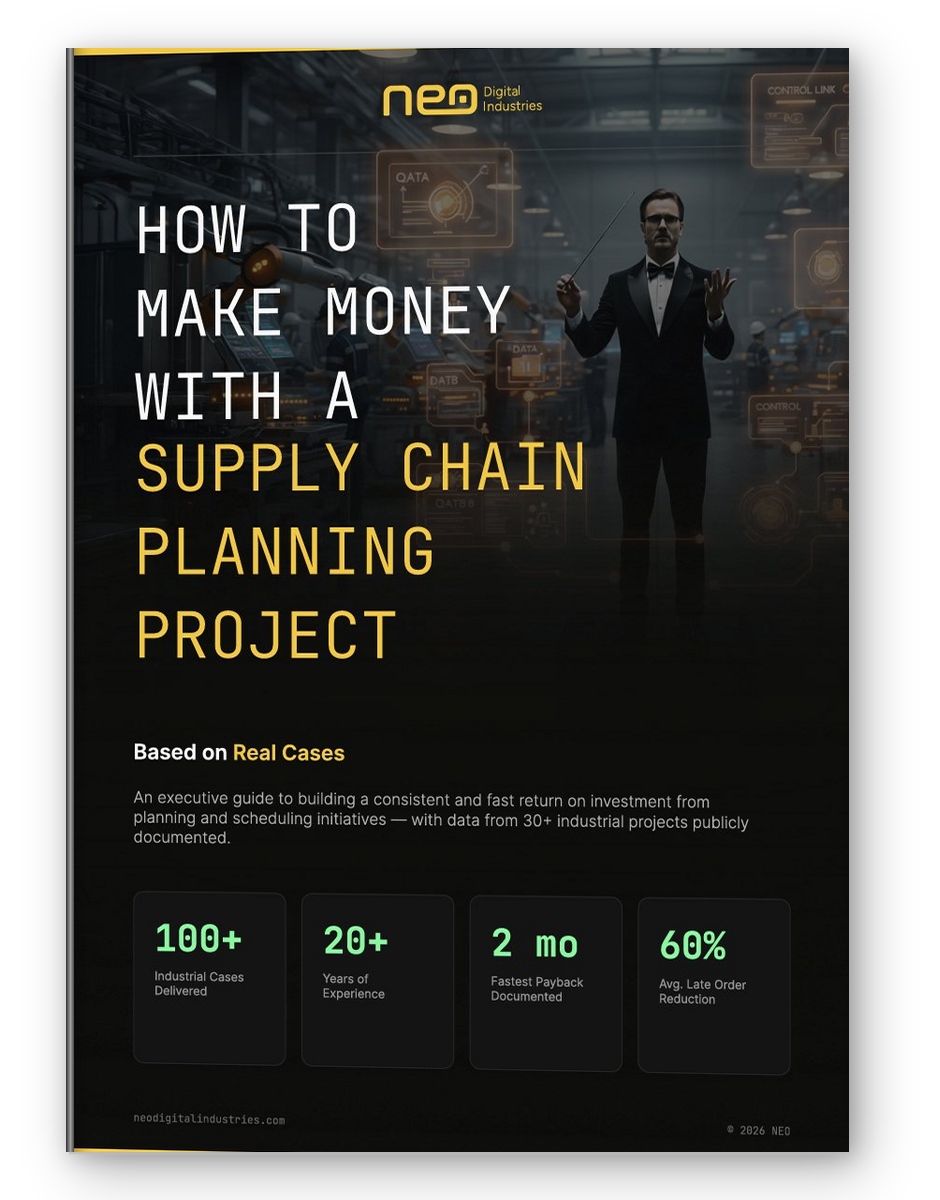
An executive guide with data from more than 30 documented projects. Learn the three sources of ROI, how to build a credible business case, and a step-by-step payback formula you can apply today.
An assessment of your operation by APICS CPIM-certified consultants. We identify where the opportunities are in production planning, scheduling and execution — and estimate the payback of the project.